
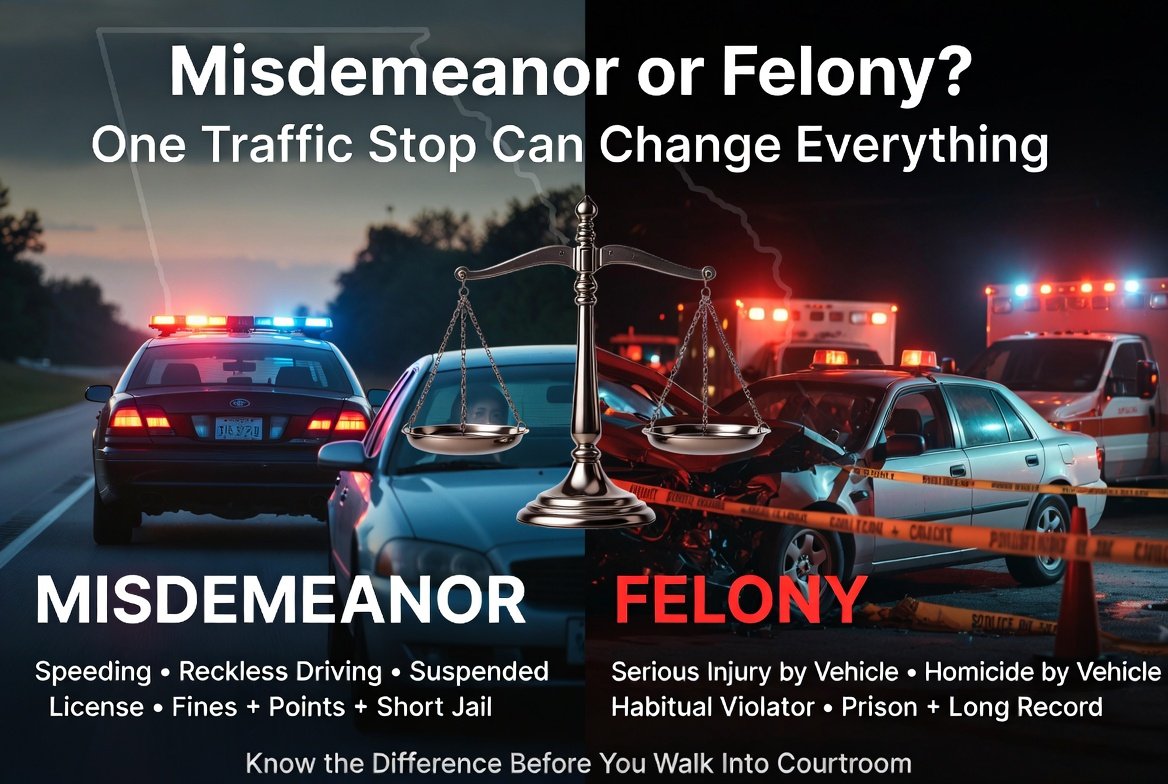
Traffic charges can follow you for years. You deserve to know what you face before you walk into a courtroom. This blog explains the difference between a misdemeanor and a felony traffic charge so you understand the risk to your record, your money, and your freedom. Some traffic offenses bring a fine and points on your license. Other offenses can bring jail, long probation, and a criminal record that blocks work and housing. You will see how Georgia law separates minor traffic cases from serious crimes. You will also see how one mistake can turn a simple stop into a felony case. Jarrett Maillet defends people in both types of cases and knows how fast things move after an arrest. You can use this guide to ask better questions, protect your rights, and avoid being pushed into a quick decision.
What A Misdemeanor Traffic Charge Means
A misdemeanor traffic charge covers many everyday driving crimes. You still face real costs and stress. Yet the law treats these as less serious than felonies.
Common misdemeanor traffic charges include:
- Speeding
- Failure to yield
- Running a red light or stop sign
- Driving without insurance
- Reckless driving
- First time driving on a suspended license
You usually face a fine, court fees, and points on your license. You can also face short jail time. Your record can still show a crime. That record can hurt jobs that ask about convictions. It can also raise your insurance rates.
The Georgia Department of Driver Services explains how points work and how they affect license status. You can read more at the Georgia DDS license points page.
What A Felony Traffic Charge Means
A felony traffic charge brings much heavier risk. The court can send you to state prison. The record can follow you for life.
Traffic related felonies can include:
- Habitual violator or repeat DUI
- Homicide by vehicle
- Serious injury by vehicle
- Fleeing or attempting to elude police in a risky way
- Hit and run that causes injury or death
Felony traffic crimes often involve injury, death, or clear danger to others. The law treats these as violent or high risk conduct. You face prison, long probation, high fines, and strict rules after release. You can lose voting rights and gun rights for a time. You can also lose many job and housing options.
Key Legal Differences
Georgia law sets different limits and results for misdemeanors and felonies. The chart below shows main contrasts. It is not legal advice. It is a simple guide.
| Topic | Misdemeanor Traffic Charge | Felony Traffic Charge
|
|---|---|---|
| Maximum jail or prison time | Up to 12 months in county jail | More than 12 months in state prison |
| Fine range | Often a few hundred to a few thousand dollars | Can reach thousands or more |
| License impact | Points, short suspension, or none | Long suspension or full revocation |
| Criminal record impact | Shows a lower level crime | Shows a serious crime |
| Future job and housing impact | Can cause some limits | Often blocks many options |
| Right to vote and carry firearms | Usually not lost | Often lost during and after sentence |
| Social stigma | Seen as a mistake | Seen as a threat to safety |
How A Case Can Turn From Misdemeanor To Felony
A traffic stop can start small and grow fast. Police and prosecutors look at three main things.
- The harm. If someone gets hurt or killed, charges can rise.
- The risk. If your driving scared other people, charges can rise.
- Your record. If you have past DUIs or reckless cases, charges can rise.
For example, speeding alone may be a misdemeanor. Yet speeding while drunk, then causing a crash that injures a child, can lead to serious injury by vehicle charges. That is a felony. A simple decision to drive after drinking can turn into years in prison.
What A Conviction Can Cost You
Both misdemeanor and felony traffic convictions carry three types of cost.
- Legal cost. Fines, fees, classes, and time in jail or prison.
- Life cost. Job loss, license loss, and strain on family.
- Future cost. Higher insurance, fewer job offers, and travel limits.
The National Highway Traffic Safety Administration shares data on how unsafe driving harms families and communities. You can see national crash facts on the NHTSA crash data page.
Steps You Can Take After A Traffic Arrest
You cannot change the stop. You can still protect yourself. Take these steps right away.
- Write down what happened from start to finish.
- Save tickets, bond papers, and court notices.
- Stay off social media about the incident.
- Show up to every court date on time.
- Ask for copies of police reports if possible.
Then ask a lawyer to explain the exact charge, the maximum penalty, and any plea offer. Ask how a plea or conviction will affect your record, license, and job. Ask what happens if you fight the charge.
How To Use This Information
You now know three core truths.
- Misdemeanor traffic charges are serious but often short term.
- Felony traffic charges can reshape your life for decades.
- One case can shift from one level to the other based on harm, risk, and record.
You cannot afford confusion. Read your citation. Ask clear questions. Demand clear answers. Your driving record, your freedom, and your family depend on it.

