
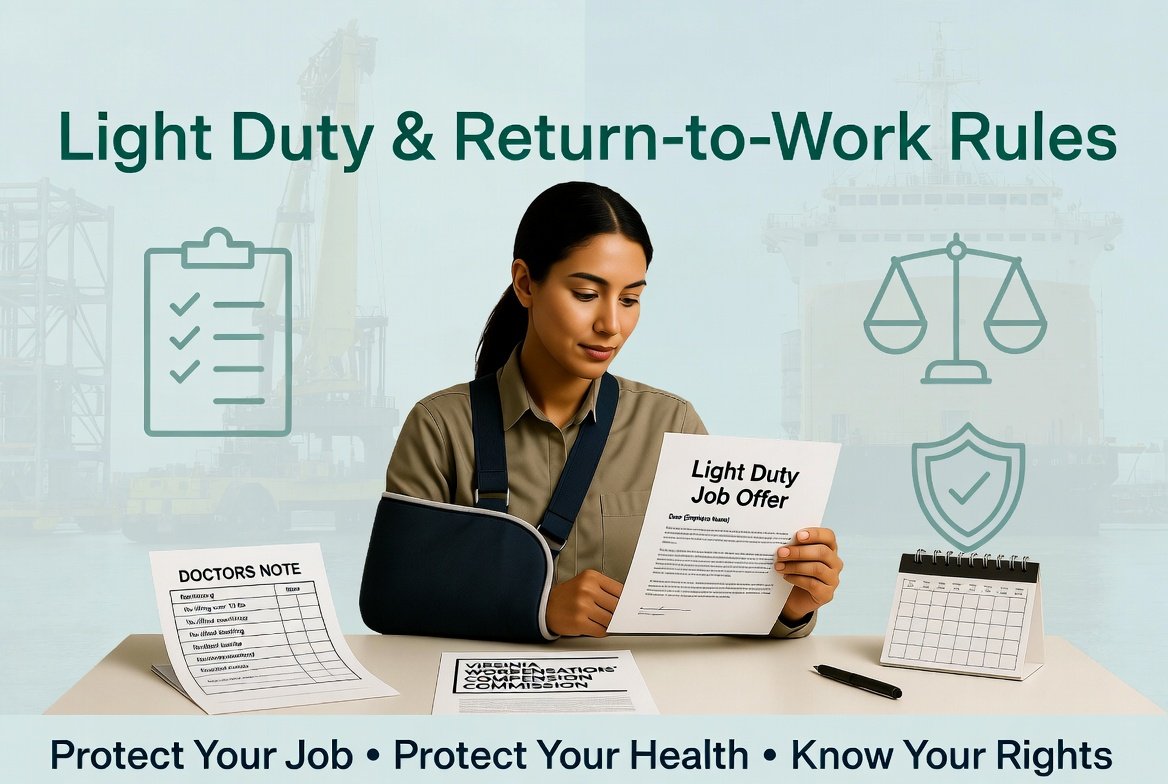
Light duty and return‑to‑work rules can protect your job or put it at risk. After an injury, you face pressure from supervisors, doctors, and insurance staff. Each one may give you different directions. You may fear losing your paycheck. You may worry that refusing a light duty job will cost you your benefits. You may also worry that going back too soon will harm your health. These rules are not simple. They depend on your medical limits, written job offers, and state workers’ compensation law. One signed form or one missed deadline can change your rights. This blog explains how light duty offers work for Chesapeake employees, how return‑to‑work decisions affect your weekly checks, and what to watch for in employer letters. If you feel pushed, confused, or punished, you should get legal help before you agree to any change in your job.
What “light duty” really means for you
Light duty is work that fits your medical limits after an injury. It might be your old job with fewer tasks. It might be a new job with new tasks. It must match the restrictions your doctor puts in writing.
In simple terms, light duty should do three things.
- Respect your weight limits and movement limits
- Match the hours your doctor clears you to work
- Avoid the exact tasks that caused or worsen your injury
Virginia law expects your employer and the insurer to follow those limits. You can read basic workers’ compensation rights on the Virginia Workers’ Compensation Commission injured worker page. That page explains how benefits work and how claims move through the system.
Common light duty offers in Chesapeake workplaces
Chesapeake has many types of jobs. Light duty looks different in each one.
- Warehouse or shipyard workers may move to inventory checks or desk work
- Health staff may move from lifting patients to phone or chart work
- Drivers may move to dispatcher or office roles
Supervisors sometimes push light duty that does not match your limits. You might feel that you must say yes. You do not. The written job offer must match the doctor note. The tasks must be clear. Vague offers cause trouble.
How return‑to‑work choices affect your check
Your income after an injury usually falls into three stages.
- You are fully out of work
- You are on light duty and earn less
- You return to normal duty or leave the job
Workers’ compensation can pay wage loss during the first two stages. The basic rule is you receive a share of the wages you lose because of the injury. The exact formula is set by Virginia law.
The table below gives a simple comparison. It is not legal advice. It just shows how the rules usually play out.
| Work status | Typical pay source | Effect on workers’ comp checks
|
|---|---|---|
| Completely out of work with doctor note | No wages from employer | Weekly checks often at two thirds of pre‑injury wage, up to a cap |
| On light duty earning less than before | Reduced wages from employer | Partial checks based on wage loss difference |
| On light duty earning same or more than before | Full wages from employer | Checks may stop because there is no wage loss |
| Refuse suitable light duty without good reason | Usually no wages | Checks can be suspended |
Insurers often cut checks when you start light duty. Sometimes they should. Sometimes they should not. Your risk is highest when you move from no work to light duty.
How to read a light duty job offer
You may get a phone call first. The real test is the written offer. You should look for three things before you sign.
- A clear list of duties you must perform
- Your work schedule and pay rate
- A clear match with your doctor restrictions
If the offer does not match your limits, you should speak up fast. You can show the offer to your doctor. You can ask for a new note. You can ask the employer to correct the offer. You should keep a copy of every version.
Pressure from supervisors and insurers
After an injury, you may hear these statements.
- You must come back or you will be fired
- If you do not accept this job, your checks will stop
- The doctor cleared you, so you are fine
These comments create fear. Some are true. Some are false. Some are half true and very misleading. There is a real risk that you return too fast, harm your body, and lose both wages and health.
Research from the National Institute for Occupational Safety and Health shows that rushed returns can lead to repeat injuries and longer recovery. Your body needs real healing time. Your job plan should respect that time.
Steps you can take to protect yourself
You cannot control every part of the process. You can control three key steps.
- Tell the truth to your doctor about your pain and limits
- Get every work change in writing and keep copies
- Ask questions before you accept or refuse any offer
Here are more concrete actions.
- Bring the written job offer to your doctor visit
- Ask the doctor to write specific limits such as weight and time standing
- Write down what your supervisor tells you and the date
- Send follow up emails to confirm what you were told
These steps create a record. That record can support your claim if a dispute comes up later.
When to get legal help
You should not wait until your claim is denied. You should seek help when any of these three signs appear.
- You are told to work outside your doctor limits
- Your checks stop or drop without clear notice
- You are threatened with firing if you do not accept a job
A workers’ compensation lawyer can review your job offer, doctor notes, and Commission orders. The goal is simple. Protect your income. Protect your health. Protect your future work options.
You work hard for your paycheck. An injury should not erase your security. Light duty and return‑to‑work rules can support you when used correctly. They can hurt you when ignored or twisted. You do not have to face that alone. You can reach out and get legal help so your next step is safe and informed.

